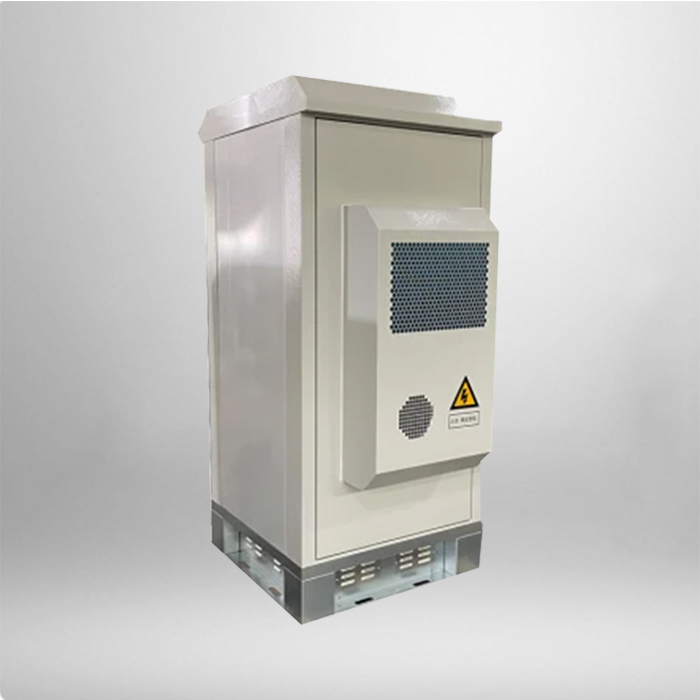
Against the backdrop of accelerated global digital transformation, the outdoor deployment of new infrastructure such as 5G base stations, smart grids, and vehicle-to-road coordination is becoming increasingly widespread. As a protective and integrated carrier for core equipment, the outdoor telecom cabinet has become a key support for ensuring the stable operation of outdoor communication networks. This cabinet equipment, directly exposed to the natural environment, provides reliable mechanical protection and environmental support for internal communication equipment, power modules, energy storage units, etc., through scientific structural design and intelligent technology integration. It serves as an important hub connecting the digital world with the physical outdoor environment.
The design core of outdoor communication cabinets begins with a profound understanding and fearless response to harsh environments. It must possess a resilience that surpasses ordinary indoor equipment. The cabinet body often adopts corrosion-resistant galvanized steel plates or composite materials, with the surface undergoing multiple anti-corrosion processes to withstand the long-term erosion of sunlight, rain, salt spray, and even industrial pollution. The tight sealing structure, coupled with professional waterproof and dustproof design, ensures that the internal core equipment remains safe and sound even in rainstorms or dusty environments. In addition, the cabinet needs to integrate an efficient temperature control system, whether through natural ventilation, forced cooling by fans, or the provision of precision air conditioning and heaters in extremely cold or hot regions. The purpose remains the same: to protect sensitive electronic equipment within a confined space from drastic external climate fluctuations, providing a “safe haven” with constant temperature and humidity.
The core advantage of outdoor telecom cabinets lies in their excellent environmental adaptability. To cope with the complex and variable climatic conditions outdoors, such cabinets generally adopt a high protection level design. Mainstream products can meet IP55 or higher protection standards, effectively resisting dust intrusion and rainwater erosion. At the same time, through moisture-proof, mold-proof, and salt spray-proof treatment processes, they are suitable for special environments such as coastal high salt spray areas and rainforest high humidity areas. In terms of material selection, the application of corrosion-resistant materials such as galvanized steel plates and stainless steel, coupled with surface powder coating treatment, greatly enhances the corrosion resistance and service life of the cabinet body, ensuring stable operation of the equipment within a wide temperature range from -40℃ to 65℃.
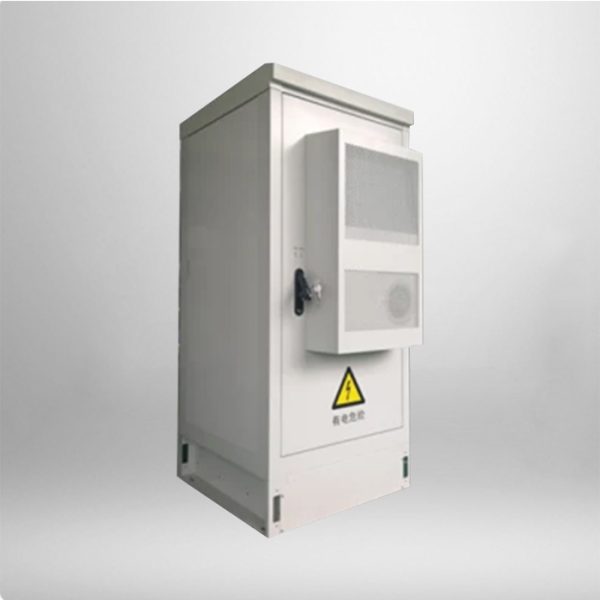
If a sturdy shell is the foundation of its existence, then meticulous security and operation and maintenance (O&M) design endow it with a wise mind. Physical security serves as the primary barrier, with heavy cabinet doors equipped with high-security locks, and even integrated electronic access control and remote status monitoring, effectively preventing unauthorized access. A reasonable internal layout and cable management scheme ensure that power supplies, fiber optics, transmission, and access devices are each in their proper place, facilitating installation and maintenance while ensuring smooth airflow and efficient heat dissipation. Modern outdoor communication cabinets are becoming increasingly intelligent, capable of real-time monitoring of key parameters such as internal temperature, humidity, power status, and access control switches, and remotely transmitting status information through the network, achieving precise O&M with “unattended operation and full visibility,” greatly enhancing network reliability and response speed.
The modular design and rapid deployment features enable it to flexibly adapt to diverse application scenarios. The outdoor telecom cabinet adopts a compartmentalized design, effectively isolating the equipment compartment, power supply compartment, and battery compartment to avoid mutual interference during the operation of different devices. Meanwhile, the cabinet size and internal layout can be customized according to specific needs. In terms of installation methods, besides traditional floor-mounted installation, it also supports various forms such as hoisting, wall-mounting, and pole-mounting, making it particularly suitable for space-constrained areas such as smart lamp posts, traffic signal poles, and along railway lines. The integrated design allows the cabinet to be pre-assembled in the factory and put into use through simple hoisting on site, significantly shortening the deployment cycle and saving manpower and land resources.
Looking ahead, with the vigorous development of the Internet of Things and edge computing, networks will become denser and more decentralized. The role of outdoor communication cabinets will become increasingly important. They are not only containers for equipment but will also evolve into miniature edge data centers that integrate computing, storage, intelligent management, and multi-source power supply. This means that higher requirements will be placed on their reliability, intelligence, energy efficiency, and environmental integration. Their design must be more sophisticated, better adapted to coexist with the environment, and even blend into the urban landscape through aesthetic appearance.