
Every commercial data room relies on solid, reliable IT infrastructure to keep daily business networks running smoothly. Servers, network switches, storage devices and complex cabling systems work around the clock to support company data transmission, office operations and customer services. Unlike basic wall-mounted network setups built for casual office use, professional data room environments demand far higher structural strength, consistent heat dissipation and orderly equipment layout. Many businesses overlook cabinet quality during procurement, only to face recurring issues including device overheating, loose hardware installation, disorganized wiring and chronic network instability.
A well-built standing network cabinet addresses these real-world operational pain points with robust structural support, dedicated thermal management and clean cable organization. With commercial network hardware becoming more powerful and densely configured in 2026, IT procurement teams and facility managers need practical, field-tested standards to select cabinets that are durable, fully compatible and adaptable for future upgrades. This practical guide covers all the key quality benchmarks and procurement tips for choosing the right cabinet for professional commercial data rooms.
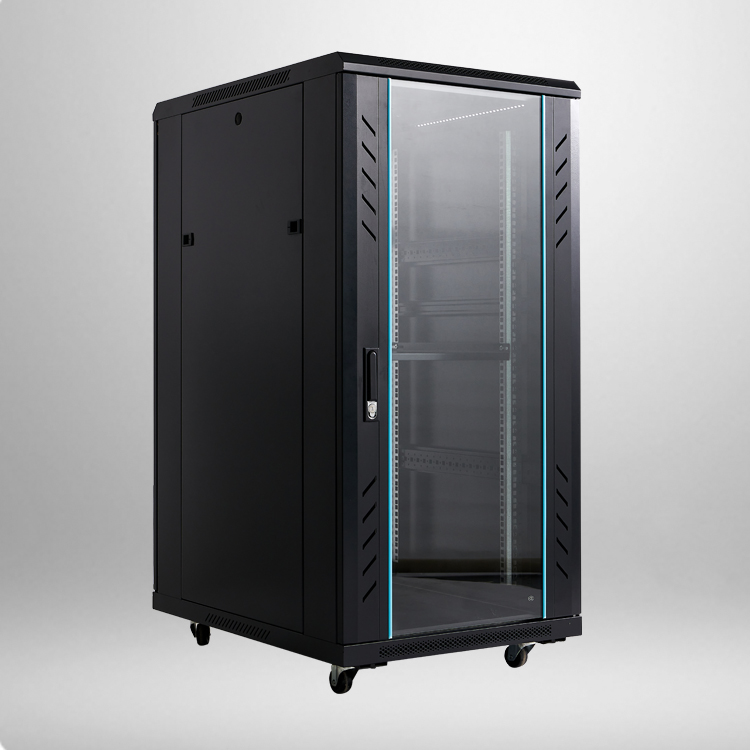
Why Commercial Data Rooms Need Specialized Standing Network Cabinets
It’s a common misconception among small and mid-sized business operators that network cabinets are nothing more than simple metal storage enclosures. In actual commercial data room operations, these floor-standing units act as core infrastructure that directly impacts network uptime, hardware service life and overall system security. Wall-mounted cabinets work perfectly for sparse, low-demand office network setups, but they lack the load-bearing capacity, full-scale ventilation and structural toughness required for non-stop commercial-grade operation.
Designed specifically for 24/7 full-load operation, a qualified standing network cabinet features a reinforced heavy-duty frame that securely holds heavy server clusters and stacked network hardware. Its integrated ventilation system and standardized cable channels maintain stable, tidy operating conditions year-round. For commercial data rooms that prioritize high network availability and straightforward routine maintenance, investing in premium floor-standing cabinet hardware effectively eliminates hidden operational risks and cuts unnecessary long-term upgrade expenses.
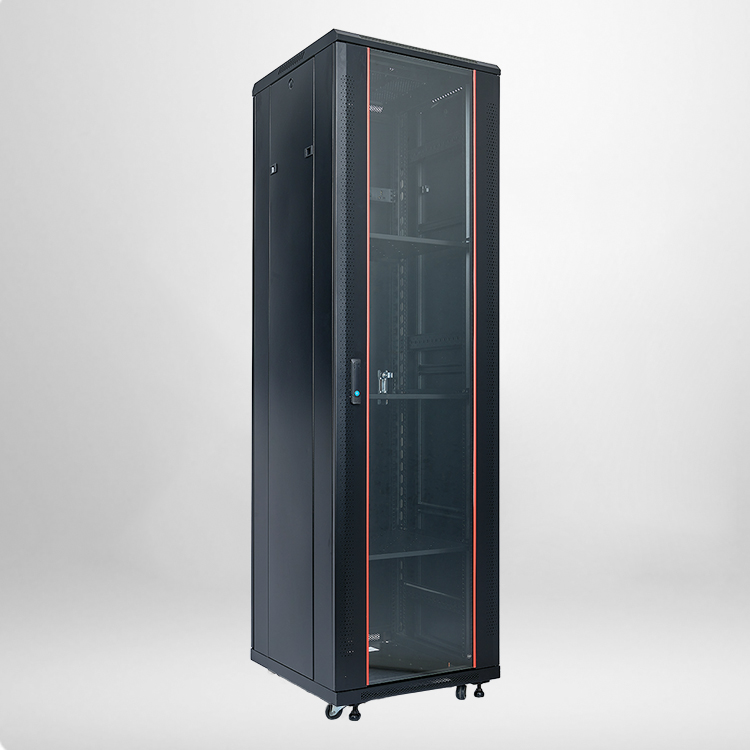
6 Core Quality Standards to Judge a Reliable Standing Network Cabinet
When sourcing cabinets for commercial data room projects, buyers should prioritize practical industry-grade performance over superficial appearance and low pricing. The following six authoritative quality standards are widely adopted by professional IT engineering teams, serving as reliable judgment criteria for cabinet durability, equipment compatibility and long-term operational stability.
1. Industrial-Grade Material and Structural Rigidity
A cabinet’s frame material directly determines its load-bearing limit and resistance to structural deformation. Premium standing network cabinets adopt thickened cold-rolled steel for the main frame, offering exceptional hardness, uniform stress tolerance and long-lasting structural stability. Budget alternatives made from thin, low-grade steel commonly bend, sink or warp under sustained heavy hardware loads. This deformation leads to uneven server mounting, loose device connections and intermittent network failures that disrupt daily data room operations.
Reputable commercial cabinets feature electrostatic powder coating on all surfaces. This professional finish resists daily scratches, air oxidation and moisture corrosion, preserving structural integrity and a clean appearance through years of continuous indoor operation. For commercial data room deployments, a robust, high-quality frame is the bedrock of reliable, trouble-free long-term performance.
2. Accurate Size and Internal Compatibility
All professional data room hardware follows universal 19-inch rack mounting standards, making internal compatibility a non-negotiable buying factor. Reliable standing network cabinets come with precisely spaced, fully adjustable mounting rails, ensuring seamless installation of all mainstream IT hardware, including servers, managed switches, PDUs and patch panels.
Standard commercial cabinet specifications cover 42U and 47U heights, paired with 600mm, 800mm and 1000mm depth options. The 600mm depth works well for basic network device setups, while 800mm and deeper models provide ample room for thick cable bundles and unobstructed rear airflow. Experienced IT buyers always match cabinet depth to their largest server hardware to eliminate cramped installation and restricted heat dissipation.
3. Systematic Thermal Dissipation Design
Round-the-clock operation of high-density servers and network gear generates consistent, significant heat buildup. Poorly ventilated cabinets trap hot air, causing localized overheating, reduced device efficiency and premature hardware failure. Premium standing network cabinets feature a multi-directional ventilation layout, including top grille vents, mesh side panels and bottom air intakes. This design creates a natural convection airflow that steadily exhausts internal heat and maintains stable operating temperatures.
For high-load data room environments running at full capacity year-round, pre-cut fan mounting slots allow for quick installation of auxiliary cooling fans. This flexible cooling setup adapts to seasonal temperature shifts and growing hardware density, keeping internal cabinet temperatures within a safe, stable range in all operating conditions.
4. Standardized Cable Management Structure
Disorganized cabling is one of the most common causes of network faults and inefficient data room maintenance. High-grade commercial cabinets integrate dedicated upper and lower cable entry ports, vertical cable management channels and fixed tie-off points. This structured layout fully separates power and data lines, minimizing signal crosstalk and simplifying routine inspections, troubleshooting and hardware replacement work.
Neatly routed cables also preserve clear airflow pathways inside the cabinet, preventing dense wiring bundles from blocking ventilation systems. This dual-purpose design boosts both daily maintenance efficiency and long-term operational safety for professional data room infrastructure.
5. Physical Security and Environmental Adaptability
Commercial data rooms house mission-critical servers and data processing hardware, making physical security and equipment protection top priorities. Trusted standing network cabinets feature lockable front and rear doors to prevent unauthorized access, accidental knocks and manual tampering with core business devices. Sturdy glass or metal door panels deliver reliable dust resistance, cutting down internal dust accumulation and reducing routine cleaning workloads.
Quality cabinets adapt reliably to subtle indoor temperature and humidity fluctuations, resisting structural expansion, contraction and surface peeling. This consistent environmental durability ensures stable performance and a long service life during years of non-stop commercial operation.
6. Scalability and Maintainability
Top-tier commercial cabinets adopt a modular assembly design for maximum flexibility. Detachable side panels and top covers, paired with fully adjustable mounting rails, let IT teams reconfigure internal layouts to match new hardware setups. Professional models also reserve dedicated space for future upgrades, including smart monitoring modules, precision temperature control systems and auxiliary power accessories.
Investing in a scalable cabinet eliminates the need for full cabinet replacement during business expansion and hardware upgrades, maximizing the long-term return on enterprise infrastructure investment.
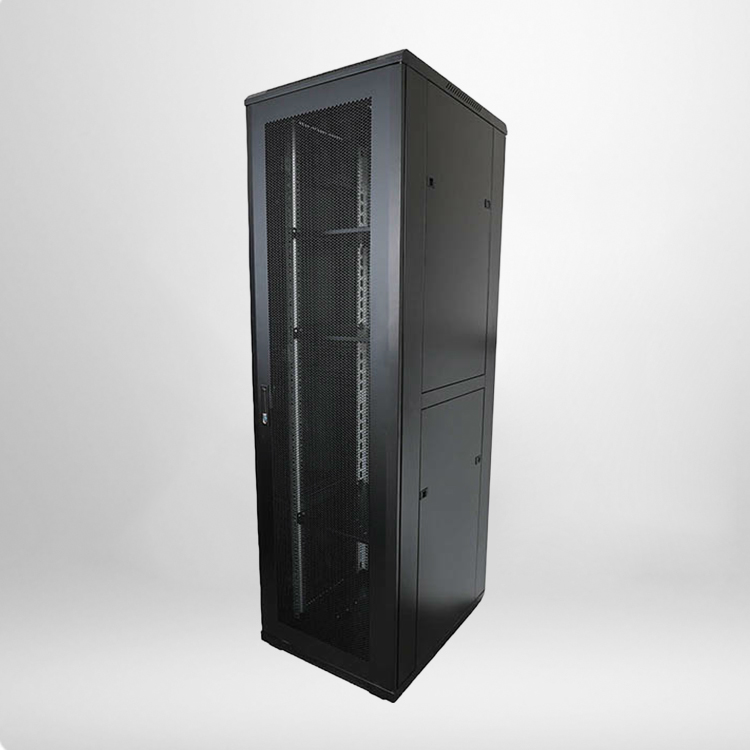
Practical Buying Tips for 2026 Commercial Data Room Deployments
In 2026 commercial data room construction, forward-thinking IT teams prioritize long-term operational stability and scalable layout over one-time low procurement costs. To adapt to ongoing business expansion and hardware iteration, industry professionals recommend reserving 20% to 30% extra rack space during initial cabinet selection, avoiding cramped layouts and frequent equipment migration.
Small and medium-sized commercial data rooms perform best with standard 42U cabinets in 600mm or 800mm depths, offering the perfect balance of cost efficiency, space utilization and performance. For high-density server rooms with heavy computing loads, 47U extra-height and deep-depth cabinet models deliver superior load-bearing capacity and thermal dissipation for stable full-time operation.
Frequently Asked Questions (FAQs)
Q1: What is the difference between a standing network cabinet and a wall-mounted cabinet?
A standing network cabinet features a heavy-duty reinforced frame, high weight capacity and full-range ventilation systems, engineered specifically for 24/7 high-density data room operation. Wall-mounted cabinets are compact and lightweight, designed for basic office network setups, and cannot support heavy server clusters or withstand long-term full-load commercial operation.
Q2: What size cabinet is best for standard commercial data rooms?
A: Most small-to-medium commercial data rooms adopt 42U height with 600mm or 800mm depth. High-density server environments require 47U height and 1000mm depth to ensure sufficient installation space and unobstructed heat dissipation.
Q3: Is ventilation structure important for network cabinets?
A: Absolutely critical. Continuous hardware operation generates substantial residual heat. Cabinets with poor ventilation trap heat inside, causing frequent overheating errors, network packet loss and accelerated hardware aging. Well-designed convection ventilation is essential for stable, long-term data room operation and device health.
Q4: Can low-cost thin cabinets be used for commercial data rooms?
A: Not recommended for commercial data room use. Thin, low-cost steel cabinets deform easily under heavy equipment loads, resulting in unstable device installation and potential safety risks. Commercial-grade deployments require thickened industrial steel frames to sustain long-term structural stability and operational reliability.
Successful commercial data room construction always centers on stable operation, flexible scalability and controllable long-term maintenance costs. A high-quality standing network cabinet is far more than a simple hardware storage unit; it serves as the fundamental infrastructure that underpins uninterrupted business network operation. By focusing on industrial-grade materials, solid structural design, efficient heat dissipation, standardized cable management and scalable performance, procurement teams can avoid common buying pitfalls and select cabinet solutions that fully match professional data room operational standards.
As enterprise network architecture continues to upgrade and hardware density steadily increases in 2026, standardized, high-performance floor-standing network cabinets will remain the top choice for modern commercial data room deployment. Investing in qualified cabinet infrastructure helps enterprises build safer, more efficient and low-maintenance IT operating environments, supporting sustainable and stable business development in the long run.