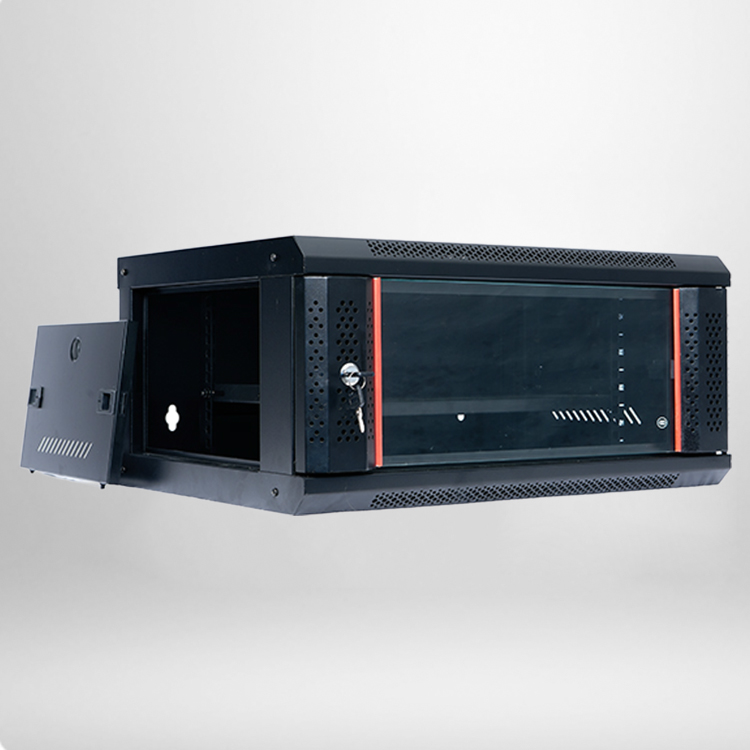
A 4u network rack serves as the core storage and protection unit for network switches, routers, small servers, and cooling equipment. Unlike larger server racks designed for industrial use, 4u models are compact, space-saving, and mostly used for residential, small business, and edge network scenarios. However, not all 4u racks are built to the same standard. Differences in internal dimensions, load-bearing capacity, material thickness, and structural design can drastically impact daily use and long-term durability.
Skipping pre-purchase evaluations often leads to common problems. Some users find their network devices cannot slide into the rack smoothly due to inaccurate internal width. Others face safety risks because the rack cannot bear the weight of full equipment. A few even need to replace the entire rack shortly after installation due to poor ventilation and overheating issues. Taking ten minutes to check key details can help you avoid all these unnecessary troubles.
Core Technical Parameters to Verify Before Purchase
Technical parameters are the most intuitive basis for judging the quality and applicability of a 4u network rack. Below is a standardized parameter reference table for mainstream qualified products, covering core indicators that users must confirm before buying.
|
Parameter Item
|
Standard Specification
|
User Reminder
|
|---|---|---|
|
Standard Height
|
4U (177.8mm)
|
Strictly follow industry universal rack unit standards
|
|
Internal Installation Width
|
482.6mm (19-inch standard)
|
Match all standard 19-inch network devices
|
|
Load Capacity
|
50KG Static Load
|
Sufficient for daily small-scale network equipment combination
|
|
Main Material
|
SPCC Cold Rolled Steel
|
Ensure anti-deformation and anti-rust performance
|
|
Ventilation Design
|
Top & Side Vent Holes
|
Guarantee heat dissipation for long-term device operation
|
First, confirm the size standard. A genuine standard 4u network rack strictly adopts 19-inch installation width and standard 4U height. Many non-standard products on the market have slightly reduced internal sizes to cut costs, which will cause standard switches and patch panels to fail to install. Second, focus on load capacity. Static load capacity directly determines the equipment quantity you can install. For home labs and small office networks, a 50KG standard load fully meets daily needs.
Material and ventilation are also key long-term factors. High-quality cold-rolled steel ensures the rack will not deform after long-term load-bearing, while professional ventilation holes can effectively reduce equipment operating temperature and extend the service life of network hardware.
Practical Usage Scenario Compatibility Check
Wall Mount vs. Desktop Placement
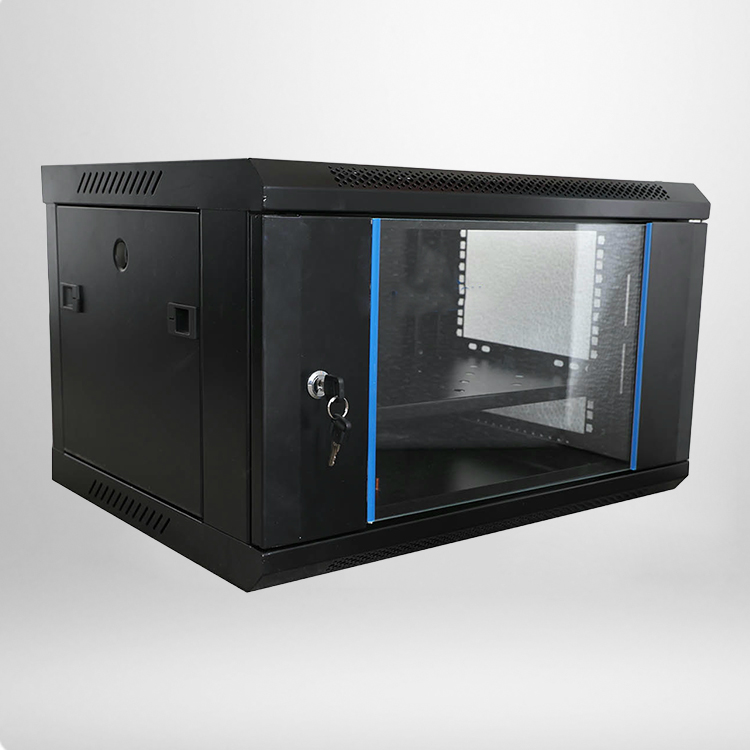
Before buying, you need to clarify your installation method. Most 4u network rack products support both desktop placement and wall mounting, but you need to check whether the product is equipped with complete wall-mounted accessories, including fixing screws and mounting brackets. If you plan to place it on the desktop, check the bottom non-slip and shockproof design to avoid device vibration during network operation.
Device Quantity and Space Reserve
Do not purchase a rack fully matched to your current equipment height. It is recommended to reserve 10% to 20% of internal space for subsequent equipment upgrades, such as adding new switches, power management modules, or cooling fans. A reasonable space reserve avoids secondary replacement of the rack and improves the scalability of the entire network system.
Frequently Asked Questions About 4u Network Rack Purchase
1. Is a standard 4u network rack suitable for home network setups?
Yes, it is very suitable. The compact size of the 4u network rack will not occupy too much indoor space, and it can centrally organize messy network lines, routers, and switches. It effectively solves the problems of wire chaos and device dust accumulation in home networks, and is the best choice for home lab and household network optimization.
2. What is the biggest difference between standard and non-standard 4u racks?
The core difference lies in installation size and load-bearing stability. Standard products strictly follow 19-inch industry specifications, compatible with all mainstream network equipment. Non-standard racks usually have narrow internal width and thin materials, which are prone to installation failure and structural deformation, with great hidden safety hazards.
3. Does a 4u network rack need additional cooling equipment?
It depends on the equipment density. For ordinary home and small office equipment collocation, the original ventilation holes of the rack can meet heat dissipation needs. If you install high-power switches and multi-device combinations for a long time, you can match a small top cooling fan to further optimize the operating environment.
4. Can a 4u network rack be used for long-term outdoor placement?
No, it is not recommended. Conventional 4u network rack adopts indoor anti-rust and dustproof design, without waterproof and sun-proof functions. Long-term outdoor placement will lead to shell rust, internal circuit dust accumulation, and even equipment short circuit, which greatly affects service life.