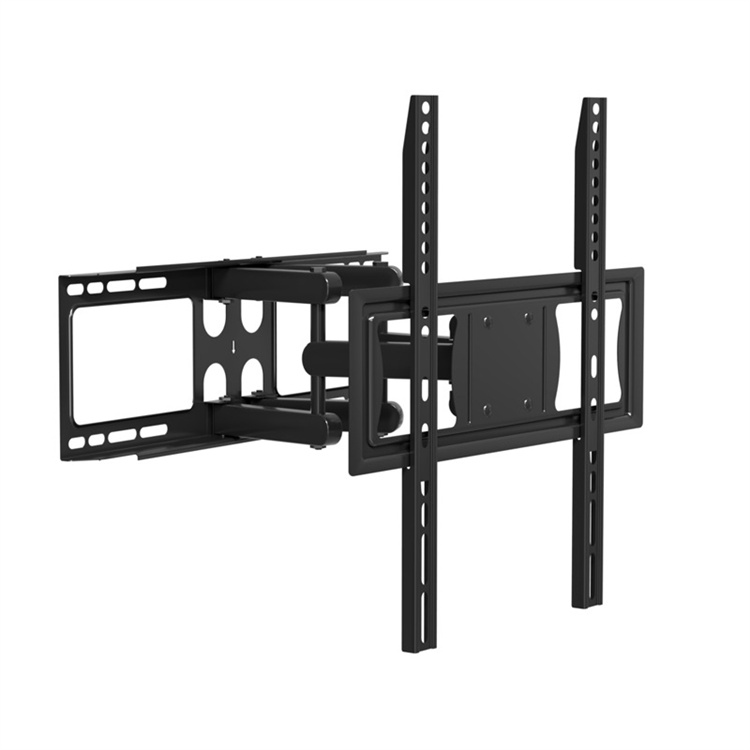
I’ll be honest with you: I used to watch TV with my neck turned sideways. The screen sat flat against the wall and my sofa faced a corner, so I spent every movie shifting my body to find a spot that worked. A swivel TV wall mount bracket fixed that in one weekend. If you’re trying to decide whether the upgrade is worth the money, this article lays out exactly what changes once you can swing the screen where you actually need it.
The Viewing Angle Problem Most Living Rooms Share
A fixed wall mount locks the TV at one angle forever. That works fine when the screen is directly opposite the sofa, but most rooms are not that neat. The couch sits at an angle, or a window throws glare across the screen at 4 pm, or someone wants to watch from the kitchen counter while dinner cooks. With a fixed bracket, your only option is to rearrange furniture or pull the curtains and sit in the dark. Neither is great.
The swivel design solves this at the source. Instead of moving the furniture around the TV, you move the TV around the room. It is a small change that removes a surprising amount of daily friction.
What You Gain With a Swivel Design
Turn the Screen Toward Wherever You Sit
This is the headline benefit. You can angle the screen toward the main sofa for a movie, then swing it toward the armchair when someone wants to read with the news on, then point it at the bed at night. One mount, three seating positions. In an open plan room, you can turn it toward the dining table during meals and back to the sofa after. The motion takes about two seconds, and you never have to decide who gets the good seat again.
Cut Glare Instead of Fighting It
Windows are the biggest enemy of a daytime TV picture. Instead of closing blinds and losing natural light, you tilt the panel a few degrees to dodge the reflection. A slight change in angle is often enough to clear the screen. This matters more than most people expect, especially in rooms where the sun comes in during the hours you actually watch.
Free Up Floor Space
Every shelf and stand you remove is floor you get back. Wall mounting lifts the TV off the furniture line, which opens up a small living room considerably. If you were using a media stand just to hold the TV, you may be able to replace it with a slimmer console or drop it entirely.
Keep Cables Tidy
Because the mount sits close to the wall, cables can run behind it and down to the outlet. On a swivel model, the arm articulates so the cables stay routed even as the screen turns. You end up with one visible wire instead of the usual tangle.
Reduce Neck and Eye Strain
This is the benefit that shows up slowly. When the screen stays at one angle, you tend to crane your neck to compensate. Over a long evening, that adds up to a stiff neck and tired eyes. Being able to center the screen to your actual sitting position keeps your head upright and the picture at a comfortable distance.
What to Check in the Specs Before You Buy
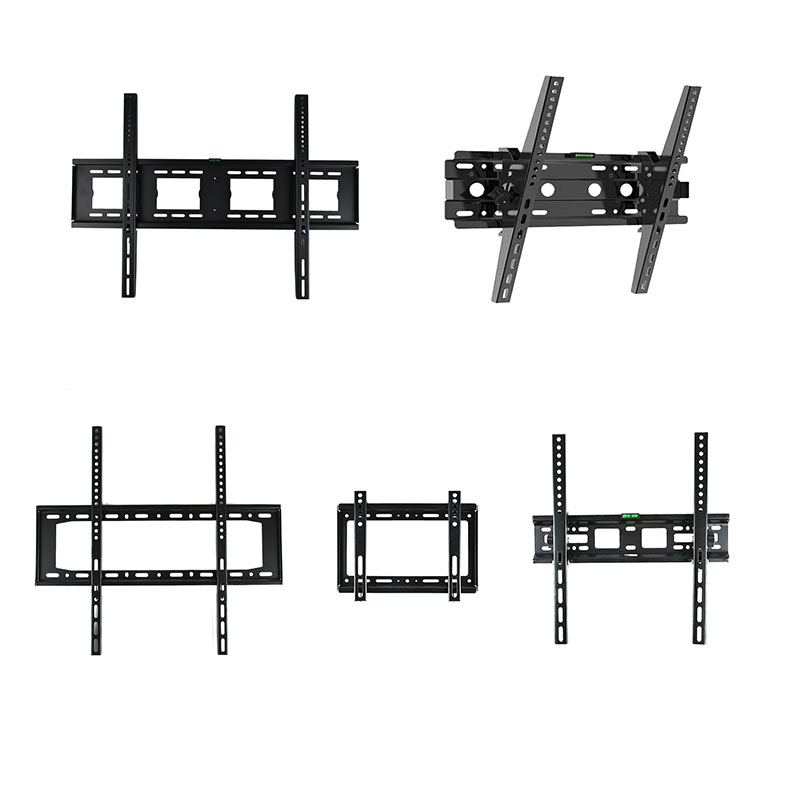
Not every swivel bracket handles the same load. These are the numbers that matter, and they should match your TV and your wall.
| Spec | What It Tells You | Typical Range |
|---|---|---|
| VESA Pattern | Hole spacing on the back of the TV | 75×75 to 600×400 mm |
| Weight Capacity | Maximum panel weight the mount can hold | 30 to 150 lbs (14-68 kg) |
| Swivel Range | Side-to-side turning angle | -60° to +60° per side, or more |
| Tilt Range | Up and down adjustment | -15° to +15° |
| Extension Depth | How far the arm reaches from the wall | 1.5 to 24 inches |
| Wall Panel Thickness | Steel plate gauge for rigidity | 1.5 mm to 3 mm |
The rule is simple: check your TV’s VESA size and weight first, then pick a bracket rated above both. If your TV weighs 40 lbs and the mount is rated at 30, do not buy it. And remember that drywall anchors only hold so much; if you are mounting a large panel on plasterboard, find a stud and anchor into it.
Who Gets the Most Out of It
A swivel design pays off most in rooms that serve several purposes. Open plan living and dining spaces, corner sofas, kitchen counters with a pass-through, and bedrooms where the TV faces the bed are all strong fits. If your TV has exactly one correct viewing position and you never change it, a fixed mount is honestly enough. If the room gets used from more than one spot, the swivel earns its keep every day.
Frequently Asked Questions
Q: Will a swivel TV wall mount bracket hold a large 65-inch TV?
Yes, if the model’s weight capacity and VESA range cover your panel. Most full-motion brackets are rated for 75 to 110 lbs, which comfortably handles a 65-inch screen. Check both numbers before buying.
Q: Does the swivel mechanism wear out over time?
The arm uses a gas-assisted or friction hinge that is designed for repeated adjustment. On a decently built unit, the tension holds for years. If the arm starts to sag, most brackets let you tighten the hinge bolts to restore the tension.
Q: Is it hard to install on drywall?
Installation takes about an hour with a stud finder and a drill. Find the studs, mark the holes, and secure the bracket into the wood rather than into the drywall alone. Many mounts ship with a paper template that marks the hole positions for you.
Q: Can I still access the ports on the back once it’s mounted?
Yes, and this is one of the quieter advantages. Because the arm swings the panel away from the wall, you can reach the HDMI and USB ports without pulling the TV down. On a fixed mount, you often have to unclip the whole screen just to change a cable.