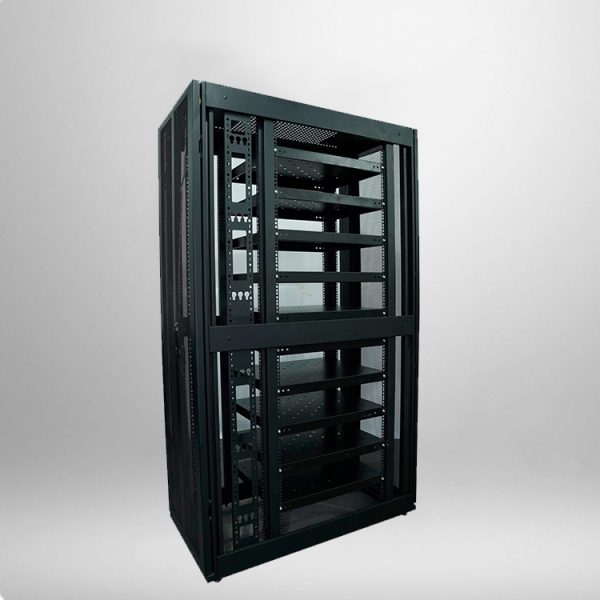
With the rapid development of the digital economy, the carrying role of data centers as computing hubs has become increasingly prominent, and high-density deployment of servers has become the norm. The accompanying heat dissipation problems directly affect the operational stability and energy efficiency of data centers. Cold&Hot Aisle Containment technology, with its core logic of “accurately separating cold and hot airflow and avoiding energy waste,” has become the mainstream solution for solving the pain points of data center heat dissipation. It is widely used in the construction and renovation of various data centers, providing key guarantees for the stable operation of computing facilities.
To understand the isolation of cold and hot aisles, we need to start with the chaotic problem of airflow organization within the data center. In unplanned traditional computer rooms, IT equipment such as servers are usually arranged in cabinets in a “face-to-face, back-to-back” manner. When the equipment is running, cold air is sucked in from the front for cooling, and the heat generated inside the equipment is discharged from the back. However, due to the lack of effective guidance, these discharged hot air can easily spread freely in the computer room and mix with the cold air supplied to the front end of the equipment. This phenomenon is called “mixing of hot and cold air”, which directly leads to two serious consequences: first, the temperature of the cold air supplied to the equipment is preheated and increased, greatly reducing the refrigeration efficiency; The second is that the refrigeration system needs to continuously output stronger cooling capacity to counteract this mixing effect, resulting in a significant amount of energy waste.
The core principle of Cold&Hot Aisle Containment is to construct a closed space through physical barriers, achieving orderly separation of cold and hot air, and breaking the traditional dilemma of turbulent airflow and loss of cooling capacity in open computer rooms. The basic logic is to arrange server cabinets in a specific direction, forming independent cold and hot channels: cold air is sent into the closed cold channel by precision air conditioning, and after the front end of the server inhales cold air to dissipate heat, hot air is discharged from the back end to the closed hot channel. The hot air is then collected and returned to the air conditioning unit for cooling, forming a closed-loop airflow cycle to ensure the full utilization of cold energy and avoid the decrease in heat dissipation efficiency and local heat island problems caused by the mixing of cold and hot airflow.
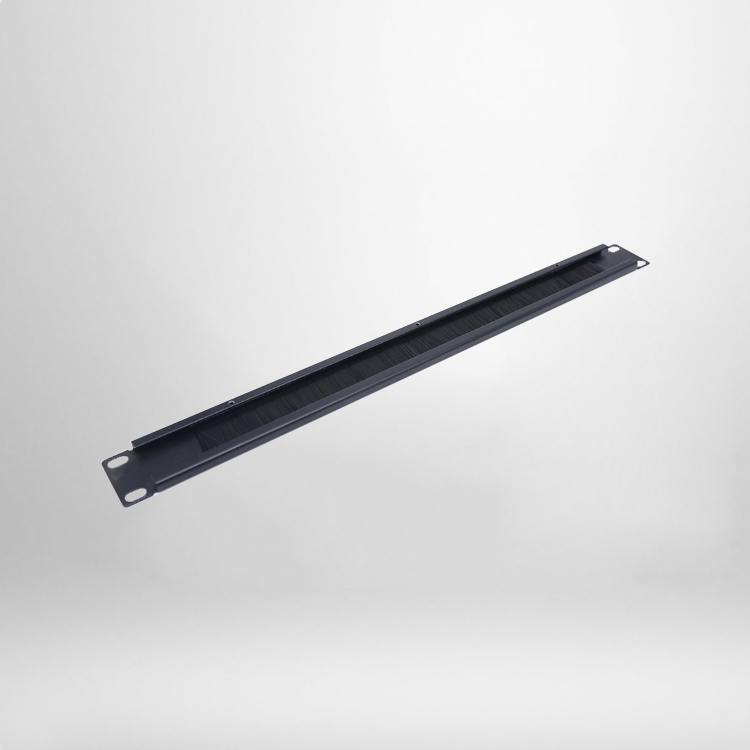
The benefits of deploying cold and hot aisle isolation technology are multifaceted. The most direct return is reflected in a significant improvement in energy efficiency. By eliminating the mixing of cold and hot air, refrigeration equipment can operate at higher return air temperatures, which typically means an improvement in the energy efficiency of air conditioning systems and may create more opportunities to utilize natural cold sources such as outdoor cold air. According to statistics, effective implementation of isolation can reduce the cooling energy consumption of data centers by up to 30% to 40%. Secondly, it enhances the predictability of refrigeration capacity and the reliability of equipment operation. The clarity of the airflow path makes the cooling capacity obtained by each cabinet more stable and uniform, effectively alleviating local hotspot problems and providing a safer thermal environment for the deployment of high-density servers. In addition, the improved energy efficiency directly translates into reduced operating costs and carbon footprint, which is in line with the development trend of green data centers.
Against the backdrop of green and low-carbon becoming a consensus in industry development, Cold&Hot Aisle Containment has become a key supporting technology for the green transformation of data centers. Whether it is a high-accuracy computing center for large Internet enterprises or a general data room for small and medium-sized enterprises, this technology can adapt to different load demands through the accurate cooling scheme, while ensuring the stability of computing power output, maximize the reduction of energy consumption. With the continuous iteration of technology, its integration with AI temperature control and efficient power supply and distribution systems is becoming increasingly deep, which will further improve the energy efficiency level of data centers and provide a solid infrastructure guarantee for the sustainable development of the digital economy. As the core solution in the field of data center cooling, the application prospects of Cold&Hot Aisle Containment will continue to expand with the growth of computing power demand, becoming the core force driving efficient, secure, and green operation of data centers.