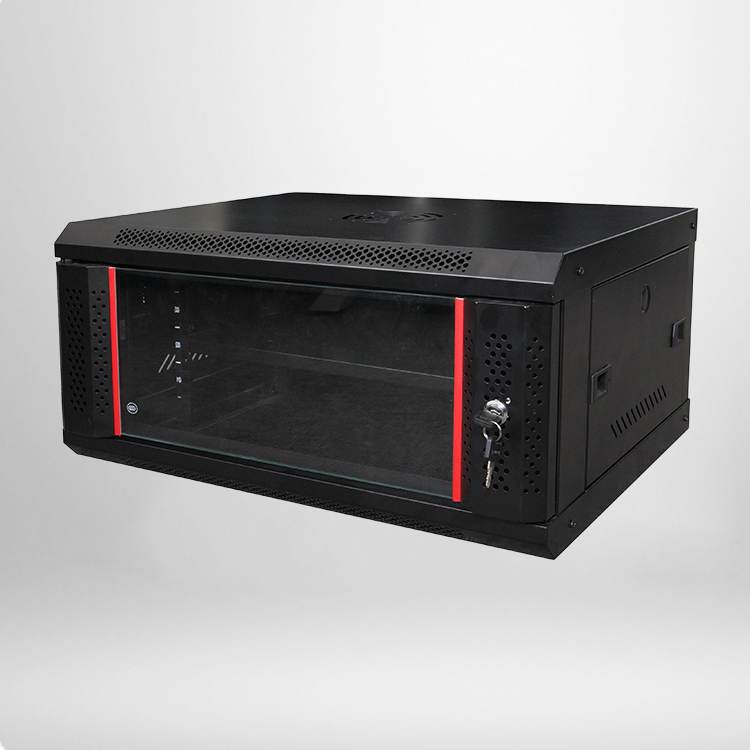
In modern information technology architecture, there is a device that is often overlooked but indispensable – wall mounted server cabinets. Wall mounted server cabinets, with their unique advantages of saving ground space and flexible installation, have become an ideal choice for scenarios with limited space resources, providing a stable and reliable operating environment for various IT equipment and silently supporting the efficient operation of the digital world. Compared with traditional floor standing cabinets, this wall mounted solution is quietly changing the deployment of digital devices, becoming a bridge connecting centralized data centers and distributed computing nodes.
Security protection and equipment assurance capabilities are the core functional support of wall mounted server cabinets. High quality wall mounted cabinets are usually made of SPCC high-quality cold-rolled steel plates, and the structural stability is guaranteed through reasonable plate thickness design. The thickening treatment of square hole bars and installation beams can effectively carry the weight of servers, switches and other equipment, preventing deformation and loosening during long-term mounting. The cabinet adopts a closed structure design, which can effectively block the erosion of internal equipment by environmental factors such as dust and moisture. At the same time, it has a certain electromagnetic shielding ability, reducing electromagnetic interference during equipment operation and ensuring the stability of data transmission. In addition, the security locks equipped in the cabinet can restrict unauthorized personnel from accessing internal equipment, reduce the risk of equipment theft or misoperation, and build the first line of defense for data security.
Space intensity is the most prominent core advantage of wall mounted server cabinets, and it is also a key feature that distinguishes them from traditional floor mounted cabinets. In small and medium-sized enterprise office areas, business halls, edge computing sites and other tight space scenarios, the problem of large floor mounted cabinets and limited layout is particularly obvious. Wall mounted server cabinets are installed by mounting on the wall, completely eliminating the dependence on ground space and fully utilizing the vertical space on the wall to complete equipment deployment. This not only saves valuable ground area for other functional planning, but also optimizes the cleanliness of space layout, avoiding management problems caused by disorderly stacking of equipment. This lightweight installation method eliminates the strict limitation of space size for data device deployment and adapts to more narrow or special installation environments.
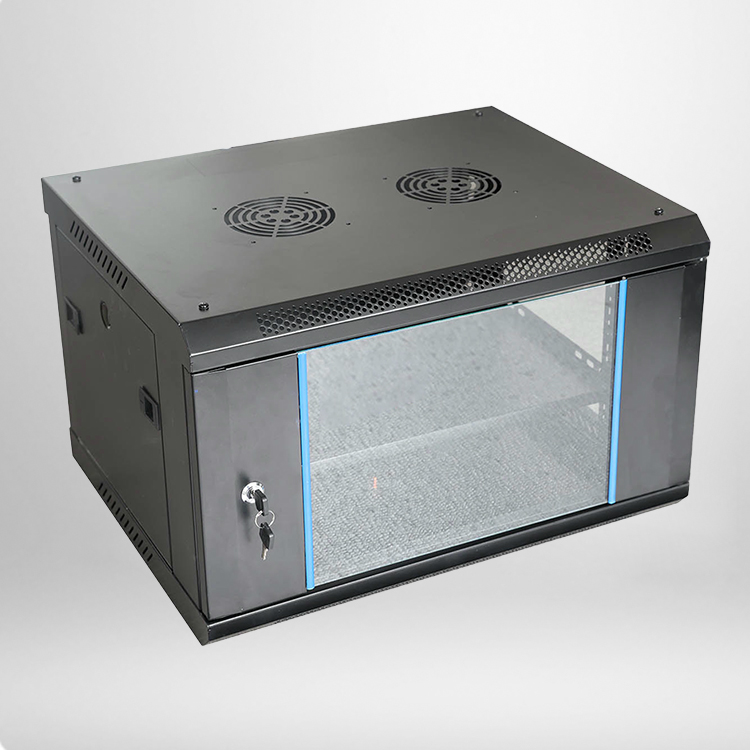
In the future, wall mounted server cabinets will be upgraded towards lighter weight and intelligence. By using lighter and stronger materials, installation convenience will be further optimized. At the same time, intelligent monitoring modules will be integrated to achieve real-time monitoring and fault alarm of the internal temperature and equipment operation status of the cabinet, reducing maintenance costs. In addition, the deepening of modular design will enable the cabinet to have stronger expansion capabilities, and the internal configuration can be flexibly adjusted according to the increase or decrease of equipment, better adapting to the dynamic needs of different scenarios.
With the further integration of information technology into every corner of society, the role of wall mounted server cabinets will become even more important. The promotion of 5G networks, the popularization of IoT devices, and the implementation of artificial intelligence applications will all drive the diffusion of computing resources to the edge. Under this trend, wall mounted solutions are likely to become the key interface connecting the digital world and the physical world. Future designs may place greater emphasis on intelligent management functions, integrating environmental monitoring, energy efficiency optimization, and remote management capabilities. The development of materials science may also bring about new types of cabinets that are lighter and have higher heat dissipation efficiency. Meanwhile, the deep integration with architectural design will enable these technological nodes to seamlessly blend into various spaces.
As a “space friendly” infrastructure in the digital age, wall mounted server cabinets have become an important link connecting various digital devices and application scenarios with their unique space adaptation advantages and reliable equipment support capabilities. Its development not only promotes the lightweight transformation of data storage deployment, but also provides solid support for the penetration of digitalization into a wider range of scenarios, playing an indispensable role in the wave of digital infrastructure construction.