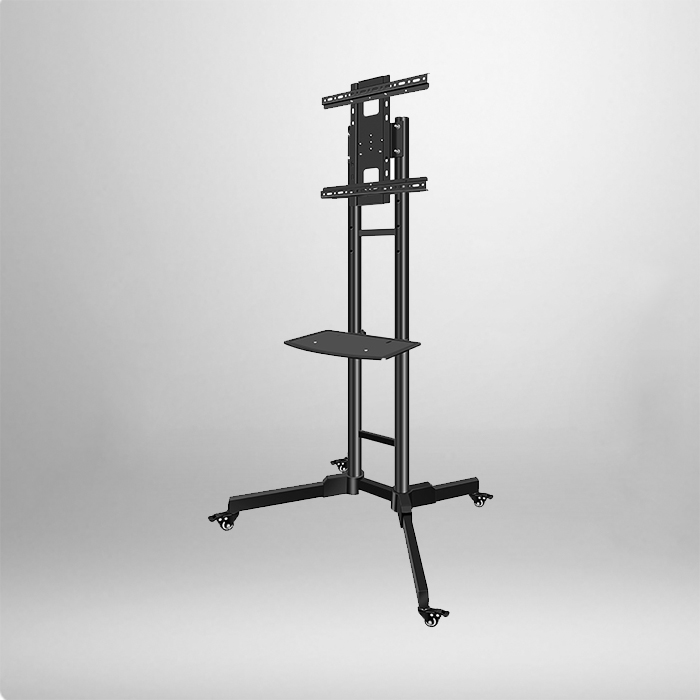
In the era of rapid development of smart homes, televisions have become an indispensable part of family life, and the placement of televisions directly affects home layout, viewing comfort, and space utilization. As a professional TV installation accessory, TV brackets have gradually replaced traditional TV cabinets and become the preferred choice for many households and public places due to their space saving, flexible adjustment, and stable safety characteristics. It not only solves the problem of TV cabinets occupying a large amount of space, but also adjusts the viewing angle according to personal needs, bringing a more comfortable viewing experience, and can perfectly integrate with various home styles and spatial layouts. Whether it’s small-sized apartments with limited space, large living rooms that pursue a minimalist style, or public places such as hotels, restaurants, offices, etc., TV brackets can play their unique role as practical helpers to optimize space and enhance the viewing experience.
The core function of a TV stand is to securely and stably fix the TV display screen to the wall. Its design and manufacturing follow rigorous engineering standards, taking into account material strength, mechanical structure, installation adaptability, and long-term reliability. However, the significance of a TV stand goes far beyond just ‘hanging up’. It fundamentally liberates the viewing freedom and spatial design possibilities of television. Firstly, by “releasing” the TV from the traditional TV cabinet, the hanging rack greatly saves ground space. Secondly, it optimizes the viewing angle and ergonomics. The fixed hanging bracket can adjust the TV screen to the height that best fits the line of sight of most people sitting, reducing neck fatigue; And the more versatile adjustable hanger can elevate the experience to a whole new dimension.
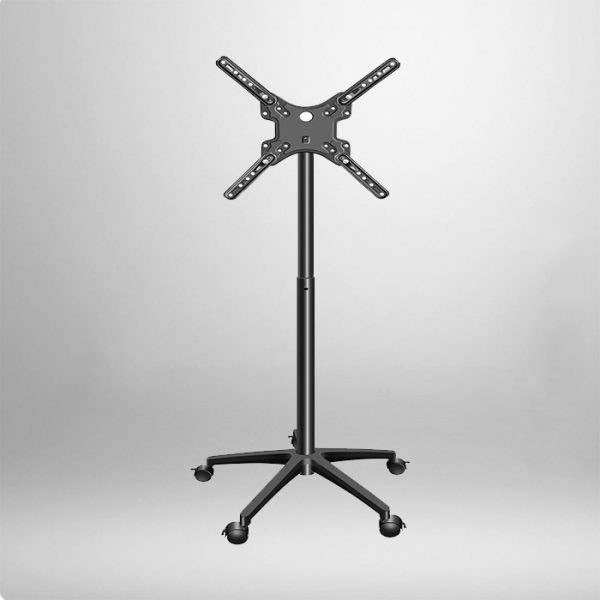
The flexibility and adjustability of TV brackets is another major advantage that sets them apart from traditional TV placement methods. Different types of TV brackets have different adjustment functions, which can meet the viewing needs of different audiences and scenes. For example, the tilting TV bracket can adjust the up and down angle of the TV, which can effectively avoid the reflection of light on the TV screen and reduce visual fatigue caused by long-term fixed angle viewing. The rotatable TV bracket can achieve left and right rotation of the TV, allowing people from different positions in the living room to watch the TV clearly, no longer limited to fixed viewing positions. Some high-performance TV brackets also have a lifting function, which can adjust the height of the TV according to the viewer’s height and usage scenario, bringing a more humanized viewing experience. This flexible adjustability makes the TV bracket suitable for various viewing needs, whether it’s sitting on the sofa watching TV, lying in bed watching movies, or viewing TV content in the office, it can be adjusted to the most comfortable angle.
Choosing and installing a suitable TV stand is a process that requires rational consideration. Users need to first confirm the size, weight, and back mounting hole spacing of the TV to ensure that it matches the specifications of the hanger perfectly. It is crucial to evaluate the wall structure and choose the correct installation method. For non load bearing walls, special reinforcement components or cross keel installation may be required. In addition, future needs also need to be considered: is there a need for adjustable functionality? What is the required adjustment range? What is the insertion and extraction frequency of the TV interface, and is it necessary to reserve sufficient rear operating space for the telescopic hanger? Finally, it is strongly recommended that the installation process itself be completed by professionals with relevant knowledge and tools to ensure that everything is foolproof. They can accurately locate the load-bearing points inside the wall, use professional tools for installation, and complete the final firmness test and cable beautification work.
TV brackets have a wide range of applications and can be used in various household and public settings to meet different usage needs. In family settings, whether it is small-sized apartments, large residences, bedrooms, living rooms, or study rooms, TV brackets can be installed according to the space size and viewing needs, bringing a comfortable viewing experience to family members. In the living room, installing the TV on the wall through the TV bracket can make the layout of the living room more simple and elegant, becoming a highlight of home decoration; In the bedroom, a tilting or rotatable TV bracket can be used to adjust the viewing angle, allowing people to comfortably lie in bed and watch TV without affecting rest. In public places, TV brackets are also widely used. In hotels and guesthouses, installing TVs on the wall through TV brackets can save room space.