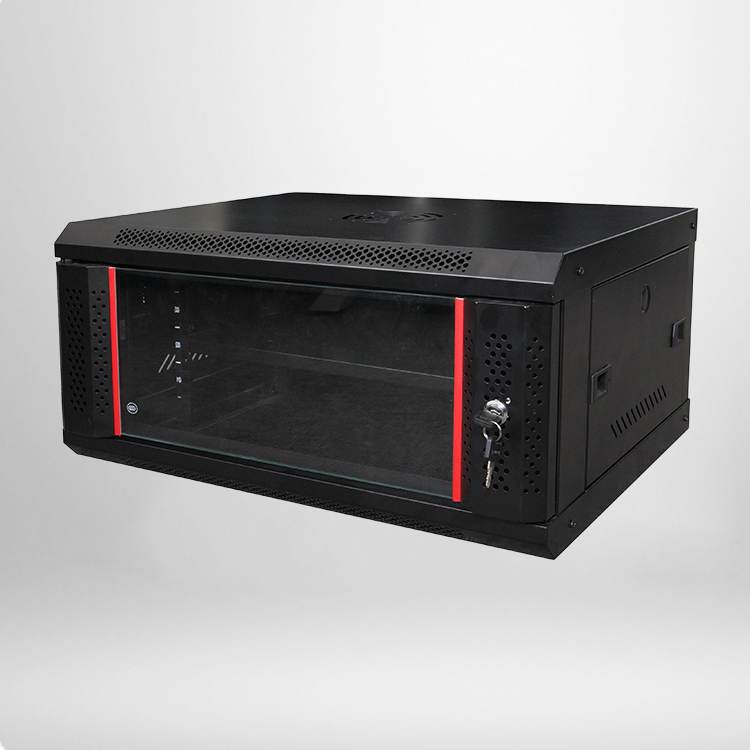
Driven by the digital wave, the deployment scenarios of network equipment are becoming increasingly diverse, from large data centers to small and medium-sized enterprise data centers, to home weak current rooms and commercial monitoring rooms. The demand for equipment storage, protection, and space utilization is constantly upgrading. Wall network cabinet, with its core advantages of saving ground space, flexible and convenient installation, and reliable protection performance, has become a network equipment management solution that adapts to various scenarios, providing a stable operating environment for routers, switches, optical modem and other devices, and supporting efficient collaboration of digital terminals.
The design philosophy of network cabinets integrates engineering practicality and spatial aesthetics. Standardized size specifications, most commonly based on rack unit height design, enable servers, switches, patch panels, and other equipment produced by different manufacturers to be installed neatly and uniformly. This modular layout not only maximizes the use of vertical space, but also provides systematic convenience for equipment installation, maintenance, and upgrades. The precise opening design, reasonable ventilation layout, and rigorous cable management scheme inside the cabinet together create a compact and safe equipment environment.
The maximization of space utilization is the most prominent advantage of Wall network cabinet, perfectly adapting to the deployment needs of small spaces. Traditional floor standing cabinets have a large volume and high requirements for floor area, making them difficult to apply in small office areas, home corners, and other limited space scenarios. The Wall network cabinet adopts a wall mounted design, which is directly fixed to the wall without occupying floor space. At the same time, the size can be flexibly selected according to the height of the wall and the number of devices. From compact small cabinets to standard cabinets with multiple U positions, it can achieve precise matching with the space. This design not only makes it possible to deploy devices in small spaces, but also to organize messy wiring, avoid tripping risks caused by ground wiring, make device layout more neat and orderly, and improve overall space utilization.
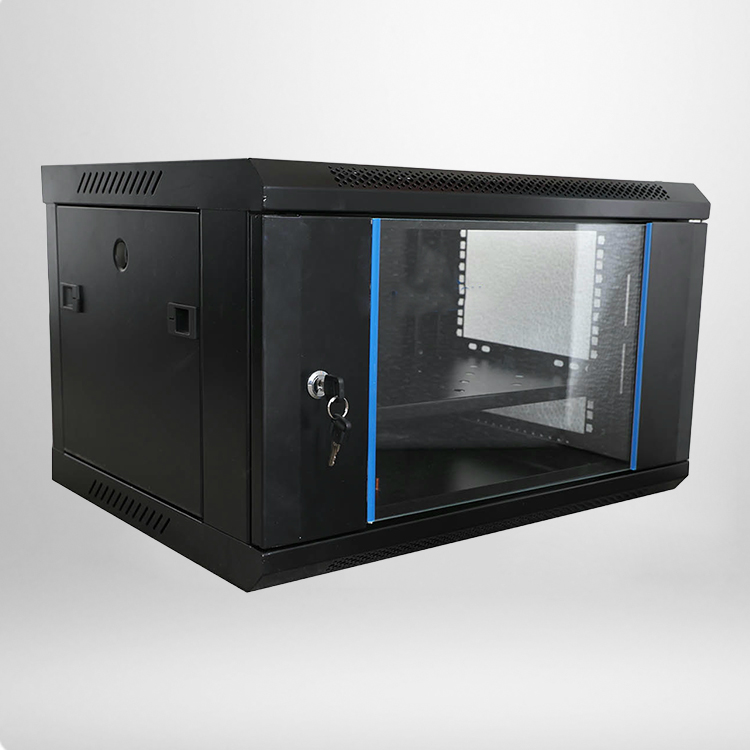
As the physical home of information technology equipment, network cabinets first provide basic physical protection. The sturdy steel structure frame can withstand considerable weight, and its surface has undergone anti-corrosion treatment to ensure stability in various environments. The lockable cabinet doors and side panels form the first line of defense, preventing unauthorized physical contact and equipment theft. At the same time, the enclosed structure of the cabinet can effectively block dust, foreign objects, and a certain degree of environmental interference, creating a relatively clean operating space for sensitive electronic devices.
Flexible adaptability and convenient installation and maintenance enable Wall network cabinet to cover diverse application scenarios. In terms of installation, it adopts a modular design with complete supporting fasteners, eliminating the need for complex construction. Wall fixing can be completed through simple operations, significantly reducing installation and time costs. In terms of functional adaptation, the cabinet is equipped with adjustable rails, cable trays and other accessories inside, which can meet the installation needs of different specifications of network equipment, and facilitate the organization and storage of circuits, making it easy to troubleshoot circuits during later maintenance. From the deployment of switches in enterprise office areas, the storage of monitoring equipment in shops, to the integration of weak electrical equipment in homes and the management of auxiliary equipment in small computer rooms, Wall network cabinets can accurately match needs and become a universal solution for network equipment deployment.
The role of network cabinets is continuously evolving from simple device containers to intelligent infrastructure nodes. Today’s cutting-edge designs are beginning to integrate environmental monitoring modules, which can sense the temperature, humidity, smoke detection, and even access control status inside the cabinet in real time. These data are uploaded to the centralized management platform through standard interfaces, enabling operation and maintenance personnel to remotely monitor the health status of the device environment and achieve predictive maintenance. This intelligent transformation transforms network cabinets from passive protective enclosures to active management units.