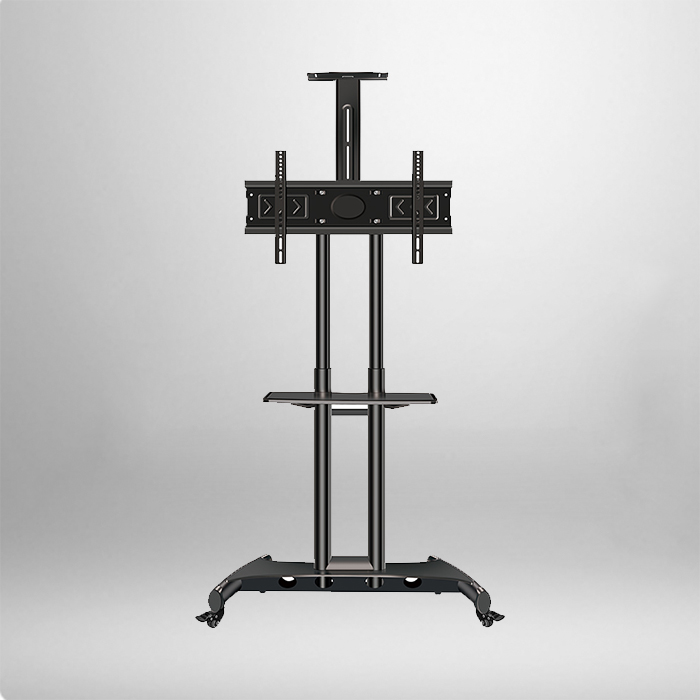
Large-screen televisions have become the mainstream choice for home theaters, living rooms, and even commercial display spaces. Compared with small and medium-sized TVs, large screens ranging from 65 inches to 98 inches have stricter requirements for mounting stability, load capacity and structural compatibility. Picking a random mounting accessory may lead to tilting, falling risks or wall damage. Learning how to screen a qualified TV bracket can help users avoid safety hazards and unnecessary replacement costs.
Key Factors to Evaluate for Large Screen TV Mounting
Many users only focus on TV size and ignore matching mounting conditions when purchasing installation accessories. In fact, large-screen installation safety depends on multiple core indicators. Before making a choice, it is necessary to comprehensively judge from load capacity, VESA specifications, wall adaptability and structural types.
1. Standard Load-Bearing Capacity
Load-bearing capacity is the most fundamental safety indicator for wall mounting. Oversized screens with ultra-thin panels still have a considerable overall weight. A qualified mounting structure must reserve a safe load margin instead of just matching the TV’s net weight. Excess load margin can effectively resist accidental shaking caused by door closing, air convection or minor human collision, preventing long-term structural fatigue and loosening.
2. VESA Mounting Standard Compatibility
Almost all modern large-screen TVs follow unified VESA hole spacing standards on the back panel. Different TV sizes correspond to different standard hole distances. Only a matching TV bracket can achieve full stress balance during installation. Mismatched hole spacing will cause single-point stress, resulting in screen tilt, screw deformation, and even local cracking of the TV back shell after long-term use.
3. Wall Structure Adaptability
Solid brick walls, concrete walls, and hollow drywall have completely different bearing limits. Large-screen installation cannot adopt unified installation methods. Hard and load-bearing walls can support heavy-duty fixed mounting, while relatively soft walls need to match expansion accessories and reinforced mounting plates to disperse pressure. Ignoring wall conditions is one of the main causes of unstable TV mounting.
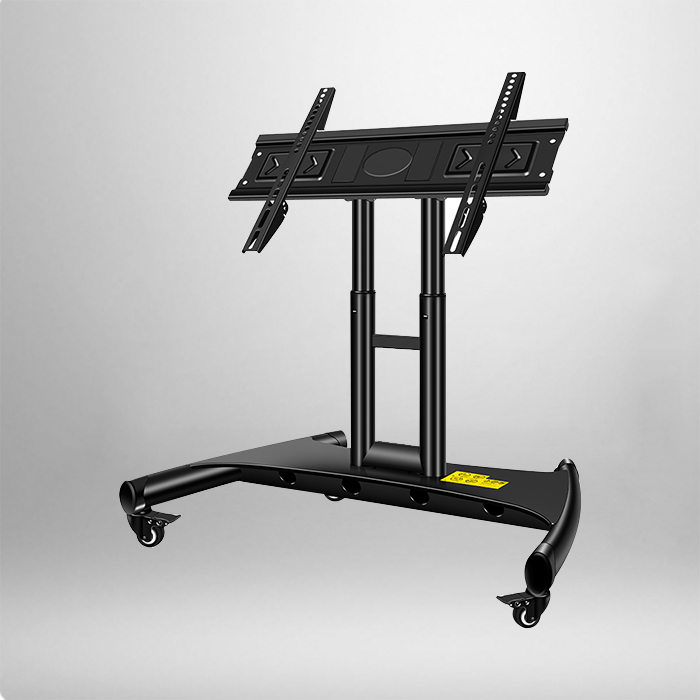
Core Technical Parameters for Large Screen TV Bracket Selection
To help users quickly screen reliable mounting accessories for large screens, the following sorted parameter table summarizes mainstream size matching, load standards and applicable scenarios, which can serve as an intuitive reference for daily selection and installation.
|
TV Screen Size
|
Standard VESA Hole Spacing
|
Recommended Safe Load
|
Applicable Bracket Type
|
|---|---|---|---|
|
65–75 Inch
|
400×400 mm
|
≥ 50 kg
|
Fixed / Tilt Bracket
|
|
85–90 Inch
|
600×400 mm
|
≥ 75 kg
|
Tilt / Full Motion Bracket
|
|
95–98 Inch
|
800×400 mm
|
≥ 100 kg
|
Heavy-Duty Reinforced Bracket
|
Common TV Bracket Types and Suitable Scenarios
1. Fixed Bracket
This type of mounting structure is simple and highly stable, with low gap between the TV and the wall. It is very suitable for users who only watch TV in a fixed direction and pursue a neat and minimalist wall decoration effect. It features strong load-bearing performance and fewer loose parts, with excellent long-term stability.
2. Tilt Bracket
It supports small-angle up and down adjustment, which can effectively avoid screen reflection from indoor light and improve viewing clarity. It is ideal for large screens installed in living rooms with large lighting areas or high wall positions, balancing stability and practical adjustment flexibility.
3. Full Motion Bracket
With multi-angle rotation and stretching functions, it can adapt to viewing needs from different angles of the room. Although the structure is relatively complex, high-quality products can still maintain good stability after formal installation. It is the best choice for multi-scene family use and spacious living spaces.
Frequently Asked Questions About Large Screen TV Bracket Selection
1. Can I use a universal bracket for oversized 85-inch or larger TVs?
It is not recommended. Ordinary universal brackets often have insufficient load margin and VESA matching accuracy. Oversized large screens have high overall weight and large stress area. Only a dedicated and reinforced TV bracket that meets the size and load standards can ensure long-term installation safety and avoid hidden dangers such as structural deformation.
2. Is a fixed bracket safer than a full motion bracket for large screens?
In terms of pure stability, fixed structures have fewer movable joints and better durability. However, regular standard full motion brackets with qualified load parameters are also completely safe for large-screen installation. The core of safety lies in whether the product meets load standards and whether the installation is standardized, not simply the bracket type.
3. How to confirm if the wall can bear a large-screen TV installation?
Solid concrete and brick walls can support all types of large-screen mounting. For drywall and hollow walls, you need to detect the wall thickness and internal keel position, and use matched reinforced expansion bolts and load-bearing accessories to disperse stress. If the wall is severely hollowed or aged, wall reinforcement is required before installation.
4. Does VESA mismatch affect installation safety?
Yes. VESA hole spacing mismatch will force the mounting structure to bear eccentric force. Long-term use will cause screw shear, bracket deformation, and even screen extrusion damage. It is necessary to confirm the TV’s back hole spacing in advance and select a fully matching mounting structure.