
In today’s digital age, businesses of all sizes rely on robust IT infrastructure to support daily operations, customer interactions, and data-driven decision-making. As data volumes explode and technology evolves, maintaining an efficient, reliable data center has become a top priority—and the right foundational components play a critical role in achieving this goal.
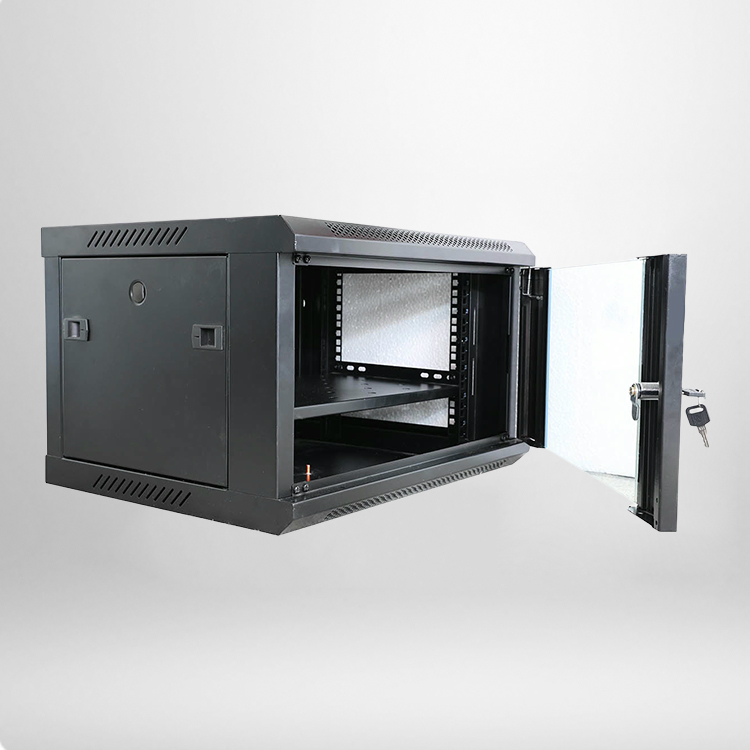
A well-designed network rack serves as the backbone of a streamlined data center, providing a structured framework to house critical equipment like switches, routers, and patch panels. Unlike generic storage solutions, it is engineered to maximize space, enhance security, and improve operational efficiency—all while supporting the seamless flow of data that keeps businesses connected.
Key Strategies to Boost Data Center Efficiency
Optimizing your data center doesn’t require a complete overhaul; small, strategic changes to equipment organization and management can deliver significant improvements in performance, cost savings, and scalability. Below are actionable steps to elevate your infrastructure:
1. Prioritize Airflow and Thermal Management
Overheating is a leading cause of equipment failure and performance degradation, especially as data centers become more densely populated with high-power devices. To mitigate this, implement a hot aisle/cold aisle configuration to separate cool air intakes from hot air exhausts. This setup prevents airflow mixing and ensures critical hardware stays within optimal temperature ranges.
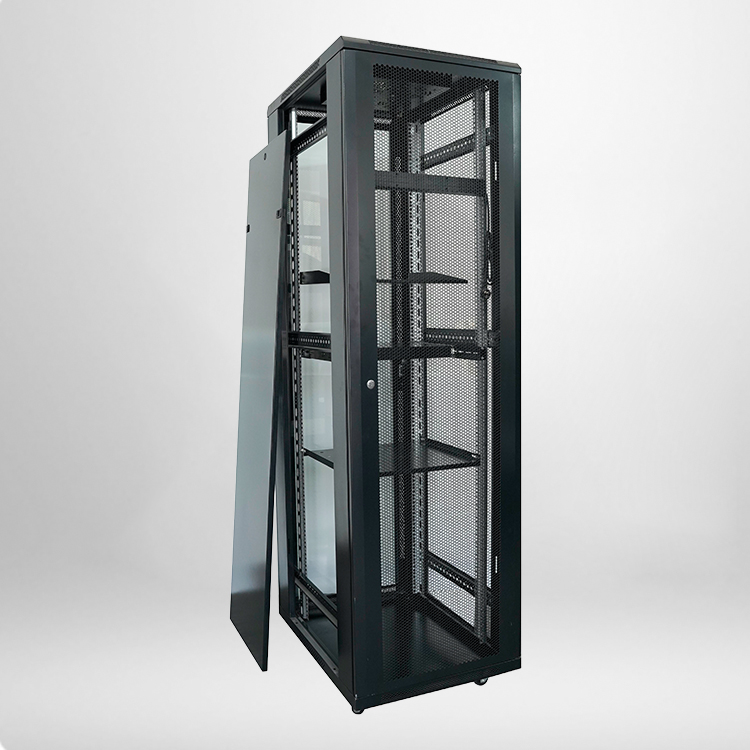
Within your equipment enclosure, use blanking panels to cover empty units—this prevents hot air recirculation and directs cool air precisely where it’s needed. Additionally, opt for enclosures with perforated doors and adjustable mounting rails to further enhance ventilation, extending hardware lifespan and reducing cooling system strain.
2. Implement Structured Cable Management
Tangled, unorganized cabling is more than just an eyesore—it leads to increased downtime, complicated troubleshooting, and even signal interference. A proactive cable management strategy simplifies operations and protects your investment:
-
Separate power and data cables to minimize electromagnetic interference (EMI) and maintain signal integrity.
-
Use cable trays, vertical channels, and management arms to route wiring neatly, ensuring easy access for maintenance.
-
Adopt a consistent labeling system for all cables, reducing the time needed to identify and resolve connectivity issues.

3. Design for Scalability
As your business grows, your IT infrastructure must adapt quickly to new demands. When configuring your network rack and overall data center layout, leave 10-20% of unused space to accommodate new hardware without costly reconfigurations. Choose modular components—such as adjustable rails and removable side panels—that offer flexibility to support evolving equipment needs.
This forward-thinking approach not only saves time and money but also ensures your infrastructure remains agile enough to support emerging technologies like cloud integration, AI, and IoT.
4. Enhance Security and Access Control
Data security starts with physical protection. Invest in enclosures with locking doors and side panels to prevent unauthorized access to critical equipment. This simple measure reduces the risk of theft, tampering, or accidental damage, safeguarding sensitive data and ensuring compliance with industry regulations.
The Bottom Line for Business Success
An efficient data center is more than just a collection of hardware—it’s a strategic asset that drives business continuity and growth. By focusing on organization, thermal management, cable care, and scalability, you can create a reliable infrastructure that supports your current needs and future ambitions.
Whether you’re managing a small server room or a large-scale data center, the right foundational components—including a well-designed network rack—are key to unlocking efficiency, reducing costs, and staying competitive in today’s fast-paced digital landscape.