
If you work in IT procurement or data center construction, you’ve likely noticed that AI computing workloads have completely changed traditional server deployment standards. Conventional rack hardware struggles to support high-density GPU operations, where inadequate heat dissipation often leads to performance throttling and unstable output. Poor procurement decisions also result in unnecessary budget waste for enterprise projects. Adopting targeted hardware and cost-effective purchasing strategies helps build reliable, budget-friendly AI infrastructure. A well-specified server rack can fully adapt to high-load AI computing environments and effectively reduce ongoing operational costs.
AI Data Center Compatible Hardware Models and Cost-Efficient Procurement Strategies
1. Why Traditional Rack Hardware Fails Modern AI Data Centers
Traditional IT infrastructure was originally engineered for basic cloud storage, web hosting, and routine virtualization tasks. These low-power workloads only require basic ventilation, standard load-bearing capacity, and simple power distribution systems. In contrast, generative AI model training and real-time inference workloads generate extremely high power density and continuous heat accumulation, placing far greater demands on physical hardware.
Most standard rack products lack specialized structural reinforcement and thermal optimization for AI scenarios. When deployed for dense GPU clusters, these generic units commonly suffer from cramped internal space, blocked airflow paths, insufficient load capacity, and limited cooling modes. These structural drawbacks cause persistent overheating, inconsistent device performance, and accelerated hardware aging, forcing data center operators to bear excessive maintenance and replacement expenses year-round.
For this reason, professional data center operators now prioritize AI-optimized hardware solutions rather than relying on universal standard configurations for high-density computing deployments.
2. Mainstream Server Rack Models Compatible with AI Computing Scenarios
2.1 High-Density Air-Cooled Standard Models
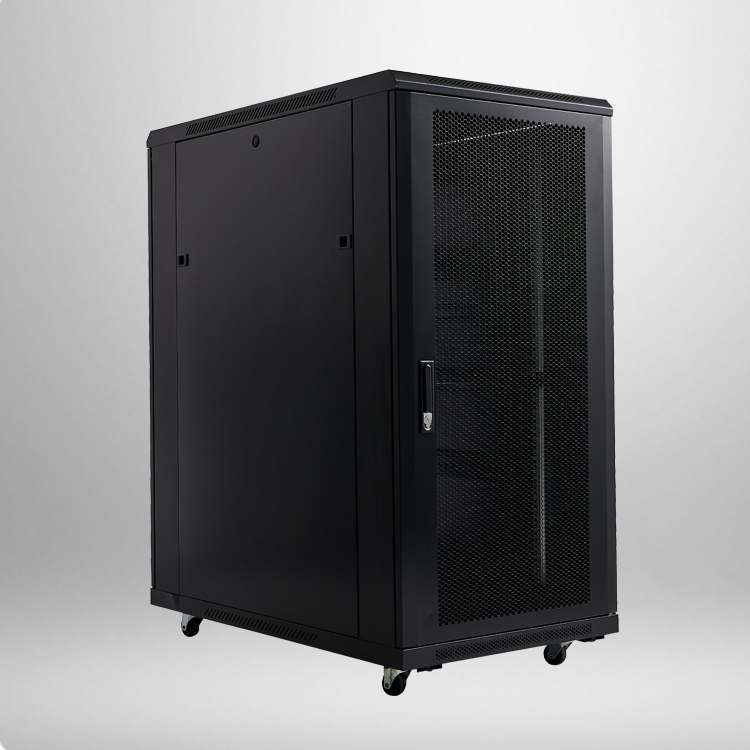
Ideal for small and medium-scale AI inference data centers, upgraded air-cooled models remain the most cost-effective option for commercial projects in 2026. These enhanced racks feature expanded internal space, optimized front-to-back airflow channels, and reinforced vertical load-bearing beams. The improved structure seamlessly fits mainstream 2U and 4U GPU servers, enabling safe and dense deployment of multi-card computing arrays.
Unlike generic racks, AI-focused air-cooled hardware integrates independent fan trays and adjustable wind deflectors, efficiently eliminating local hotspots caused by prolonged GPU high-load operation. For startup teams and mid-sized data center expansion projects, these models deliver balanced performance and budget efficiency without requiring complex facility renovations.
2.2 Liquid-Cooling Supported Low-PUE Models
Large-scale AI training centers pursuing ultra-low PUE and maximum energy efficiency widely adopt liquid-cooling compatible hardware as their primary upgrade solution. These professional racks come with pre-reserved standardized pipeline interfaces and specialized sealing structures, supporting both full immersion and rack-level liquid cooling systems to meet extreme heat dissipation demands.
Liquid-cooling ready hardware cuts overall power consumption by nearly 40% compared with traditional air-cooled setups, drastically reducing long-term electricity expenditures. Though the upfront procurement cost is higher, its long-term energy-saving advantages stand out in large-batch, long-duration computing operations, making it the preferred choice for enterprise-level AI base construction.
2.3 Modular Rapid-Deployment Models
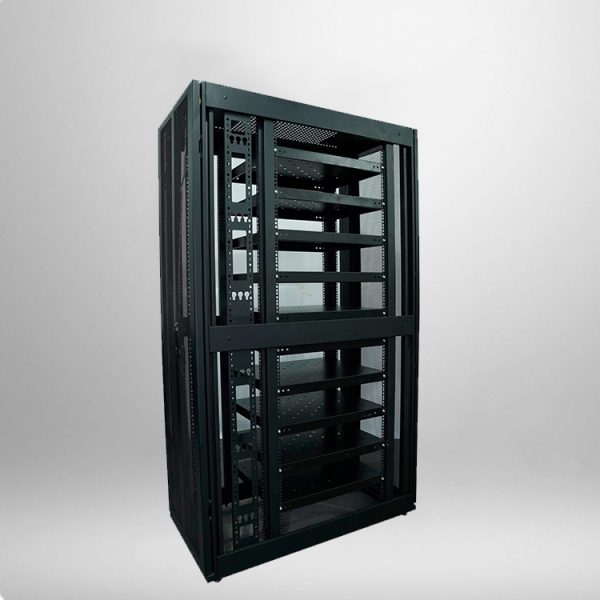
Modular integrated rack designs are highly favored for edge AI computing and temporary data center expansion projects. This type of hardware pre-integrates complete power distribution, heat dissipation, and cable management modules, supporting fast on-site assembly and rapid deployment. Operators can flexibly adjust internal layouts and load-bearing structures to match varying GPU server specifications.
The core advantage of modular hardware lies in shortened construction cycles and reduced manual deployment costs. For engineering contractors facing tight project deadlines, these plug-and-play units greatly improve project turnover efficiency and minimize on-site installation errors.
3. Practical Cost-Saving Procurement Tips for B2B Buyers
3.1 Match Configuration According to Actual Workload
Over-provisioning is the most common and costly mistake in AI data center procurement. Many purchasing teams unnecessarily select high-end liquid-cooling configurations for standard inference tasks, leading to substantial budget waste. In practice, routine AI inference workloads run perfectly on optimized air-cooled racks, while ultra-high-load model training scenarios alone justify liquid-cooling investments. Matching hardware specifications to actual workloads can reduce initial procurement costs by 20% to 30%.
3.2 Prioritize Integrated Bundle Purchasing
Separately purchasing racks, PDUs, cooling accessories, and cable management components often causes specification mismatches and higher individual pricing. Reputable manufacturers offer exclusive bundled packages tailored for AI projects, featuring full compatibility and unified pre-debugging. Bulk bundled procurement eliminates adaptation risks and unlocks more competitive wholesale pricing for B2B clients.
3.3 Choose Scalable and Upgradeable Structures
AI hardware iteration cycles are extremely short, making fixed, closed hardware prone to rapid elimination. It is wise to select scalable rack structures with expandable interfaces and adjustable load modules. This flexible design supports future GPU hardware upgrades and cooling system iterations, avoiding full equipment replacement and cutting long-term renovation expenses.
4. Frequently Asked Questions for AI Data Center Procurement
Q1: What is the core difference between AI-compatible and ordinary rack structures?
AI-optimized racks are built with enhanced load-bearing capacity, high-density heat dissipation systems, and expandable interfaces to sustain long-duration, high-power GPU operation. Ordinary racks are only designed for low-power daily IT workloads and frequently suffer from overheating, structural deformation, and performance instability under rigorous AI computing conditions.
Q2: Is liquid cooling necessary for small and medium AI data centers?
Liquid cooling solutions are primarily designed for large-scale training clusters with ultra-high power density. Most small and medium inference platforms can fully meet operational requirements with optimized air-cooled setups, which deliver simpler maintenance and higher overall cost performance.
Q3: How to avoid budget waste in bulk procurement?
Buyers can effectively avoid budget waste by first clarifying actual project workloads and selecting targeted configurations instead of blindly pursuing top-tier specs. Combining bundled procurement strategies with scalable hardware designs balances upfront investment and long-term upgrade costs perfectly.
Q4: What details determine the service life of data center hardware?
Multiple key factors determine rack durability and operational stability, including main beam thickness, industrial anti-corrosion surface treatment, cooling system matching precision, and rational internal cable layout. Premium manufacturing techniques and well-designed structures significantly extend the overall service life of data center hardware.
In summary, AI data center infrastructure procurement is no longer a simple specification-matching task, but a systematic decision that balances performance, energy consumption, and long-term operational costs. Distinguishing scenario-specific rack models and mastering professional procurement strategies helps IT buyers optimize budget allocation and avoid project risks. Adopting a well-tailored server rack guarantees stable operation of AI computing hardware and delivers sustainable cost benefits for data center projects.