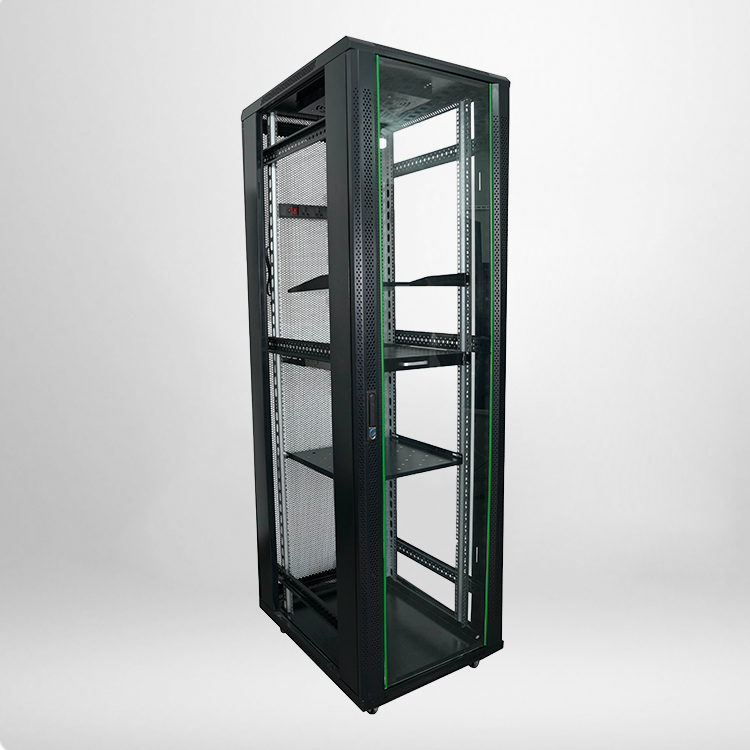
U is short for rack unit, a global standard measurement for the vertical mounting space inside rack-style IT enclosures. Under EIA-310 and IEC 60297 standards, one U equals exactly 1.75 inches, or 44.45 millimeters. This fixed measurement applies to both the server cabinet itself and every rack-mounted device you install inside it, including servers, switches, firewalls, PDUs and patch panels.
It is important to note that U only describes usable mounting space between the front and rear mounting rails. It does not include the top frame, base, casters or door structures of the cabinet. A 42U model does not measure exactly 73.5 inches from floor to top cap, even though the total usable rail space adds up to that figure. That difference trips up a lot of buyers who only check the U rating and forget to measure the full external height for room clearance.
Standard Rack Unit Reference Table
| Rack Unit | Usable Height (Inch) | Usable Height (mm) | Typical Use Case |
|---|---|---|---|
| 1U | 1.75 | 44.45 | Network switch, firewall, patch panel |
| 2U | 3.50 | 88.90 | Entry rack server, small UPS |
| 4U | 7.00 | 177.80 | Storage chassis, multi-bay server |
| 12U | 21.00 | 533.40 | Wall-mounted small office cabinet |
| 24U | 42.00 | 1066.80 | Mid-size on-premise IT closet |
| 42U | 73.50 | 1866.90 | Standard data center floor cabinet |
This table gives you a quick reference for calculating how much space your hardware stack will consume. When planning, always add blanking panels for empty slots. Open gaps disrupt airflow and can raise operating temperatures for all devices mounted in the rack.

How To Calculate Your Required U Capacity
Start by listing every rack-mount device you plan to install and note the U rating of each item. Add those values together, then reserve extra space for future upgrades and blanking panels. A common rule of thumb is to leave 15 to 20 percent of total U space unused.
For example, if your current hardware adds up to 32U, a 42U cabinet works well. You have room to add new servers or networking gear later without replacing the whole enclosure. If you fill nearly every available unit on day one, you will run into cooling and expansion limits quickly.
Remember that U only covers vertical space. Depth and static load rating are separate critical factors. A device may fit the U height perfectly, yet be too deep to close the cabinet door safely. Always cross-check depth and weight limits alongside the rack unit count.
Frequently Asked Questions
Is U The Same Measurement For All 19-inch Rack Equipment?
Yes. The rack unit standard applies across all 19-inch rack-mount hardware. As long as your devices follow the widely accepted EIA and IEC standards, their U height will align with the mounting rails inside a standard enclosure. This universal standard is why hardware from different makers can share the same rack space.
Can I Install A 2U Device Into A 1U Slot?
No. Each device occupies its full rated vertical space. A 2U server needs two consecutive rack unit positions on the mounting rail. Trying to force it into a single slot will not align the mounting holes and may damage both the hardware and rail structure.
What Is The Most Common U Size For A Server Cabinet?
42U remains the most popular floor-standing size for data centers and larger IT rooms. Wall-mounted versions often come in 6U, 9U or 12U for small offices and edge deployments. The best size depends on your hardware list, available floor space and long-term expansion plans.
Does A Higher U Rating Mean A Heavier Cabinet?
Not automatically. The U rating tells you usable vertical space, while the load capacity depends on frame thickness, rail design and construction. A 24U cabinet might have a higher weight rating than a cheaply built 42U unit. Always review the static load specification separately.
Final Tips For Avoiding Sizing Mistakes
Many buyers focus only on U count and overlook airflow, cable routing and door clearance. After you add up your U requirements, take time to sketch out the layout. Place heat-generating servers near the middle of the rails and leave blanking panels wherever slots stay empty.
If you are choosing a server cabinet for the first time, match the U capacity to your hardware roadmap rather than only your immediate equipment list. A small amount of spare rack space saves you from extra work and expense when you scale your IT environment later. With a clear understanding of what U represents, sizing your rack setup becomes straightforward and far less stressful.