
Key Wall Network Cabinet Specs That Matter for IT Project Procurement
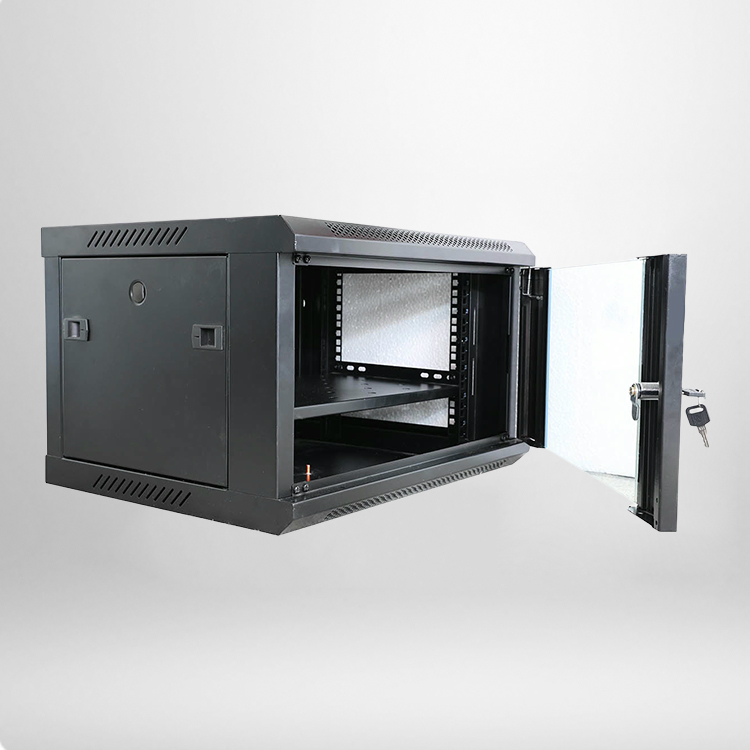
Unlike floor-standing server cabinets designed for large data centers, a wall network cabinet targets compact space scenarios, including enterprise utility closets, retail edge rooms, school campus sub-network areas, and home office server setups. Its core value lies in space-saving installation, standardized equipment compatibility, and reliable daily operation protection. For IT purchasers, blindly pursuing low prices or oversized capacity will create hidden risks for project delivery and later operation. Below are the must-check specifications for formal project purchasing.

1. Standard Rack Unit Size & External Dimensions
Rack unit (U) size is the primary parameter to match network equipment, and it is also the first spec IT purchasers confirm. One standard rack unit equals 1.75 inches (44.45mm) of vertical internal space, which fits all mainstream 19-inch rack-mounted switches, routers, firewalls, and patch panels.
Most practical wall network cabinet models for commercial projects range from 4U to 15U. Too small, and you cannot accommodate expanded equipment; too large, and it wastes wall space and increases unnecessary load. Meanwhile, depth determines compatibility with equipment with long antennas or rear cable interfaces. Most edge and small office scenarios adopt 450mm to 600mm depth specifications.
|
Cabinet Spec
|
Standard Parameter
|
Applicable Scenario
|
|---|---|---|
|
Rack Unit Height
|
4U / 6U / 9U / 12U / 15U
|
4-6U for home & small office; 9-15U for enterprise edge projects
|
|
Standard Width
|
483mm (19-inch standard)
|
Compatible with all mainstream rack-mounted network devices
|
|
Common Depth
|
450mm / 550mm / 600mm
|
450mm for compact devices; 550-600mm for multi-device stacking
|
2. Structural Material & Load-Bearing Capacity
Structural stability directly affects installation safety and equipment service life, which is a non-negotiable core standard for engineering procurement. Qualified wall network cabinet products on the market mostly adopt SPCC cold-rolled steel plates, with anti-rust electrostatic spraying treatment on the surface to adapt to long-term indoor working environments.
Load-bearing capacity is a key indicator to distinguish high-quality and low-quality products. Thin-plate inferior cabinets are prone to deformation and sagging after loading switches and UPS modules, which may even cause wall falling risks. Formal project-grade wall cabinets have clear static load standards: 4U-9U models support 60-80kg static load, while 12U-15U reinforced models can reach 90-120kg, fully meeting the load demand of dense network equipment deployment.
3. Ventilation & Heat Dissipation Design
Network equipment generates continuous heat during long-term operation, and poor heat dissipation is the main cause of device crash and performance attenuation. Professional IT purchasers will carefully verify the ventilation structure of the wall network cabinet instead of only focusing on appearance and size.
High-quality project-grade cabinets adopt a three-dimensional heat dissipation design: dense ventilation holes on the front and rear doors, reserved fan mounting positions on the top, and hollow heat dissipation grooves on the side panels. This passive heat dissipation structure can meet the continuous operation demand of most conventional network equipment. For high-load edge computing equipment, the reserved fan interface can realize active heat dissipation upgrade, avoiding equipment overheating failure in high-temperature environments.
4. Security & Cable Management Configuration
For enterprise and commercial projects, equipment safety and later maintenance convenience are important procurement assessment indicators. Lockable cabinet doors are standard for formal wall network cabinet products, which can effectively prevent unauthorized touch and equipment damage, ensuring the safety of enterprise network core equipment.
Cable management details determine the maintenance efficiency of the later project. Excellent cabinets are equipped with reserved cable holes at the top and bottom, matching rubber edging to prevent wire scratching. Internal vertical and horizontal cable ties and fixed guide rails can standardize the wiring of power lines and network lines, avoiding cable entanglement, signal interference, and inconvenient line inspection problems.
Frequently Asked Questions About Wall Network Cabinet Procurement
1. What U size of wall network cabinet is most suitable for small and medium enterprise projects?
For most SME office network transformation and edge wiring projects, 9U and 12U specifications are the most cost-effective choices. They reserve enough space for conventional switches, optical modules, and UPS power supply equipment, and also reserve margin for later network expansion, avoiding repeated replacement caused by insufficient space.
2. Is load-bearing capacity more important than appearance for engineering procurement?
Absolutely yes. For project-based procurement, structural stability and load-bearing safety are primary priorities. A wall network cabinet with beautiful appearance but insufficient load-bearing will deform after long-term use, squeezing internal equipment and burying safety hazards. Purchasers need to prioritize products with clear steel plate thickness and static load parameters.
3. Do I need to choose a cabinet with active heat dissipation fans?
It depends on equipment density and operating environment. For ordinary office environments with few devices, passive ventilation holes can fully meet heat dissipation needs. For closed small spaces and high-density equipment deployment, it is recommended to select a cabinet with reserved fan positions, which can install fans as needed to enhance heat dissipation and ensure stable 24-hour operation of the network system.
4. Are 19-inch standard dimensions necessary for project use?
Yes. Almost all commercial rack-mounted network devices follow the 19-inch international standard. Choosing a non-standard wall network cabinet will lead to unable installation or unstable fixation of equipment, affecting project acceptance and later equipment replacement and upgrade. Standard size compatibility is the basic guarantee of project universality.